MY SON SAID PAYING HIS BILLS DIDN’T MAKE ME FAMILY—SO I STOPPED PAYING EVERYTHING


“Paying the bills doesn’t make you family.”
My son said it across the Christmas dinner I had spent two days preparing, without raising his voice or looking the least bit ashamed. The carving knife rested beside the brisket, the candles burned low in my grandmother’s silver holders, and the cranberry chutney he had loved since childhood sat untouched near his elbow. For one strange second, all I could hear was the soft ticking of the hallway clock and the brittle scrape of his wife’s fork against my wedding china.
I kept my hand around the stem of my wineglass.
Lauren leaned forward, her sequined dress flashing under the chandelier. She smelled like expensive perfume and winter air, and her expression held the calm satisfaction of someone who had been waiting for the right moment to draw blood.
“You’re just jealous of my mother,” she said.
I looked from her to Ethan, the son whose tuition, mortgage, insurance, car, credit cards, and vacations I had quietly paid for years. His eyes dropped to his plate, but he did not defend me. He did not tell his wife she had gone too far. He simply sat there in the house his father and I had bought, eating the food I had cooked, while allowing me to be treated like an unwanted guest.
A small smile touched my mouth.
It was not warm.
“Then your mother can pay the twenty-five thousand dollars I spent on this family’s Christmas,” I said.
Neither of them spoke.
They thought that was the end of the argument.
It was actually the beginning of the end of everything I had been paying for.
By midmorning that day, the smell of smoked brisket had filled every room of my house in the Blue Ridge foothills outside Asheville, North Carolina. I had seasoned the meat the night before with coarse salt, black pepper, smoked paprika, brown sugar, and the dry mustard blend my mother taught me to make when I was sixteen. Then I set it over low heat before sunrise and let it cook until the edges turned dark and the center softened enough to fall apart beneath a fork.
Bowls of roasted carrots, Brussels sprouts, and sweet potatoes lined the kitchen counters. Two loaves of rosemary bread cooled beneath a clean linen towel, and a jar of my cranberry-orange chutney waited beside the stove. Ethan used to sneak spoonfuls of it when he was a boy, standing barefoot in the kitchen while pretending he had only come downstairs for water.
I polished the silver until my face appeared in every spoon. I removed the china from the dining room cabinet, unwrapping each plate from yellowed tissue paper. The faded blue border had once been bright, the year David and I bought the set with money we should probably have saved. We were twenty-four, newly married, and convinced that adulthood meant owning dishes too delicate for ordinary days.
I had promised to use them only for special occasions.
That Christmas, I told myself, was worth the trouble.
I lit the mantel candles early so the wax would soften into the rounded, uneven edges I loved. I stacked kindling in the fireplace and adjusted the garland around the windows. Even the tree received more attention than it needed. I moved ornaments half an inch to the left or right until the glass caught the string lights properly, then stood back and studied it as though perfection might persuade my family to behave like one.
As I worked, my mind drifted through the years. I remembered taking a second bookkeeping job when Ethan was accepted into a university in Virginia. I remembered doing payroll for a dental practice until midnight and waking before six to prepare tax returns for small businesses. I remembered selling the engagement ring David gave me because financial aid did not cover enough, then telling Ethan I had misplaced it so he would not feel guilty.
I remembered sewing Lauren’s bridesmaid dress after the alterations shop quoted a price she called outrageous. I remembered cancelling a trip to Maine when Ethan and Lauren fell behind on their mortgage, and the weekend David and I spent replacing their water heater instead of celebrating our anniversary. After David died, I continued helping because it felt like one of the last promises I had made to him.
Take care of the family.
That was what he had said from his hospital bed, his fingers thin around mine.
I had spent years interpreting those words as an instruction to keep paying.
At six o’clock, I stepped back and looked at the dining room. The glasses stood in perfect rows. The napkins were folded into fans. Place cards rested above each plate, though only three of us were coming. The brisket steamed beneath foil, carrying a smell so rich and comforting that for a moment I believed the evening could become everything I had wanted.
I imagined conversation flowing without effort. I imagined Ethan telling stories from work and Lauren asking about my watercolor class. I imagined feeling like more than the person who handled emergencies and transferred money when they called.
The clock struck six.
They were supposed to arrive at seven.
I smoothed the front of my dark green dress, adjusted the place cards, and waited for the warmth I had spent years chasing.
The doorbell rang at seven twenty.
I wiped my hands on my apron and opened the door. Ethan stood on the porch with his wool coat unbuttoned and his scarf hanging loose, as though he had remembered the dinner only after someone reminded him. He gave me a quick hug, the kind people offer at office parties, and stepped into the house before I could hold him for more than a second.
“Merry Christmas, Mom.”
“Merry Christmas, sweetheart.”
Lauren followed him, bringing a sharp trail of cold air and perfume. Her silver dress caught the porch light with every movement. It looked more appropriate for a hotel reception with champagne than a family dinner in the mountains, but she wore everything as if an invisible camera followed her.
She did not hug me.
She glanced at her phone while her manicured thumb continued scrolling.
“Merry Christmas, Lauren.”
“Mm-hmm. You too.”
I closed the door and tried to ignore the disappointment tightening beneath my ribs. Ethan dropped his keys on the entry table and walked straight toward the living room. Lauren paused at the mirror to inspect her lipstick before following him.
The house was warm, but their arrival seemed to lower the temperature.
“How’s work, Ethan?” I asked when I joined them.
He had already settled into the sofa with one ankle resting over his knee and his phone in his hand.
“Busy.”
“Are you still managing the Henderson project?”
“Probably.”
He did not look up.
I turned toward Lauren.
“I saw the holiday launch for your boutique. The photographs were lovely.”
She lifted her eyes for a second.
“It went fine. We’re booked through January.”
“That’s wonderful.”
She returned to her screen.
The brisket waited in the dining room, still warm, but the air between us had already gone cold. I suggested we sit down, hoping food might loosen whatever knot had formed. They followed me with the distracted obedience of people entering a meeting they did not want to attend.
Ethan checked his phone while walking. Lauren answered a message before taking her seat.
I poured wine and asked about their plans for New Year’s Eve.
“Maybe Los Angeles,” Ethan said.
“Or Miami,” Lauren murmured without looking at me.
Their answers overlapped, and neither seemed interested in settling on the same city. I smiled while setting down the bottle, but the gesture felt automatic. All the warmth I had built throughout the day escaped through a crack I could not see.
Dinner began in the kind of silence that magnifies every small sound. Forks scraped china. Ice shifted in glasses. The grandfather clock in the hallway seemed louder than usual. I tried filling the emptiness by asking about friends, work, weather, and even Lauren’s dress, but each reply arrived clipped and faded before I could build another question around it.
Halfway through the meal, I searched for something lighter.
“I was thinking about the presents this year,” I began carefully. “They may be my favorites yet.”
Ethan continued eating.
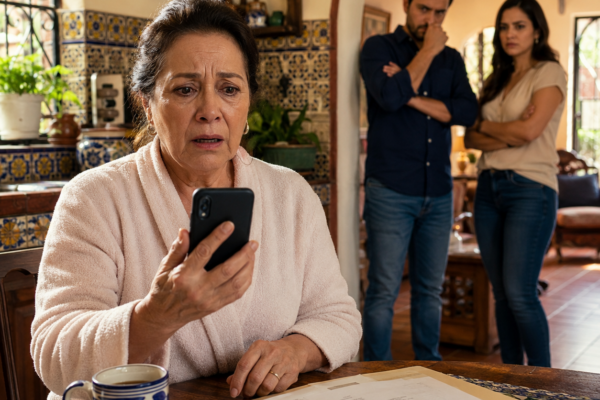
“I took on a few extra accounting clients this fall to cover everything. Between the ski trip, the new laptop for Lauren, the furniture for your guest room, the gifts, and tonight, I spent a little over twenty-five thousand dollars. It was worth every cent if it gave us a beautiful Christmas together.”
I wanted to sound casual, perhaps even proud. I was not asking for praise. I only wanted them to understand that the evening had cost more than money.
Before my words settled, Ethan’s fork struck his plate.
He leaned back and narrowed his eyes.
“Seriously, Mom?”
Something in his tone made my shoulders stiffen.
“Excuse me?”
“Paying bills doesn’t make you family.”
The room seemed to shrink around us. My hand remained on the base of my wineglass, steady only because I ordered it to be.
Ethan continued.
“You always bring up what things cost. Every gift, every payment, every favor. It’s exhausting.”
“I rarely mention what I pay.”
“You just did.”
“I mentioned it because I worked additional hours to make this Christmas possible.”
“No one asked you to do that.”
Lauren leaned closer, enough for her perfume to reach me.
“You’re just jealous of my mother,” she said.
I looked directly at her.
“Jealous of Diane?”
“She knows how to support us without turning everything into a transaction.”
Diane had never paid Ethan’s tuition. She had not covered their mortgage during the year Lauren’s boutique nearly failed. She had not made their car payments, funded Lauren’s certification program, paid their health insurance, or deposited money into their account when they overdrew it.
Diane arrived at parties wearing designer coats and offered advice.
I arrived with checks.
Yet somehow, Diane represented class and generosity while I had become a burden who talked too much about money.
A measured smile touched my lips.
“Then Diane can pay the twenty-five thousand dollars,” I said calmly.
Silence fell over the table.
Ethan stared at his plate, his jaw tightening. Lauren lifted her wineglass as though she had not heard me. Behind them, on the mantel, a porcelain angel stood between two candles. Beneath one lace-trimmed wing, the tiny lens of my old security camera caught the light.
I had turned it on before they arrived.
Several months earlier, Ethan accused me of misremembering a conversation about money. Lauren supported his version so confidently that I questioned myself for days. After that, I began recording important family discussions, not because I intended to use them against anyone, but because I needed proof that my own mind still belonged to me.
The camera had captured their cold greeting, their dismissive answers, Ethan’s accusation, and Lauren’s insult.
I poured myself iced tea. My hands no longer trembled. The pressure in my chest had shifted into something cleaner and more useful.
Some words cannot be withdrawn.
That night, mine were not the only ones that would have consequences.
When dinner ended, I gathered the plates. Ethan and Lauren moved into the living room without asking whether I needed help. Within minutes, the television was on and their low laughter drifted into the kitchen while I scraped expensive food into storage containers.
I left the dishes in the sink.
Then I walked down the hall to David’s old study and closed the door until the latch clicked.
The desk lamp cast a circle of amber light over the documents I had been collecting for years: bank statements, insurance notices, loan summaries, mortgage records, credit card reports, and tax forms. I opened the bottom drawer and removed my laptop. Its familiar hum greeted me like an old friend.
My fingers moved across the keys with a certainty I had not felt in a long time.
The first login took me to the bank that handled Ethan and Lauren’s mortgage. Because I had guaranteed the loan and made the payments for almost seven years, my account was connected to the automatic withdrawal.
I found the recurring transfer.
My transfer.
With two clicks, I cancelled it.
No more quiet withdrawals on the first day of each month. No more subsidizing a five-bedroom house they could not afford because Lauren needed multiple rooms for inventory, photographs, and guests who rarely stayed.
Next came Ethan’s SUV loan.
Cancelled.
Then the premiums for their private health insurance.
Cancelled.
The monthly payment on the credit card Lauren used for boutique expenses.
Cancelled.
Finally, the remaining balance on the student loan from the advanced merchandising program Lauren had attended in New York. Ethan once called it an investment in their future. The investment had produced debt, expensive taste, and a woman who believed my sacrifice proved I was jealous of her mother.
I removed that payment too.
One by one, their names disappeared from my scheduled transfers. Each cancellation felt like sliding a blade through a rope I had held for decades. My hands ached, not from effort but from release.
When the list was empty, I sat back.
A memory arrived without invitation.
Fifteen years earlier, I had been at the kitchen table surrounded by unpaid bills when Ethan called to say he had been accepted into an out-of-state university. The tuition number made my stomach tighten. David’s construction business was struggling that year, and we did not qualify for enough assistance.
I worked double shifts all summer. During the day, I handled books for a regional hardware company. At night, I processed accounts for a dental clinic. I sold my engagement ring and several pieces of jewelry my mother left me. Ethan graduated without student debt, and I believed I had built a foundation beneath him.
Somewhere along the way, that foundation became scaffolding.
Instead of standing on it, he remained suspended above the consequences of his own choices.
I closed the laptop and let the silence wrap around me. Beyond the door, canned laughter from the television reached the study.
It no longer hurt.
The ropes had been cut.
In the morning, they would feel the drop.
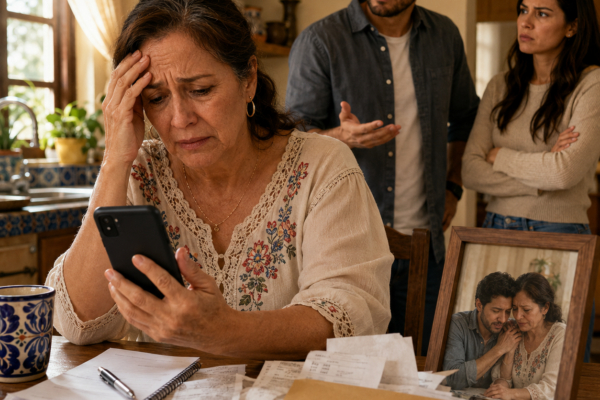
The first vibration came before sunrise. I rolled over and let it stop. Another followed seconds later, then another. By the time I sat up, the screen displayed missed calls and notifications stacked like dominoes.
Ethan’s voice filled the first message, tense and impatient.
“Mom, what happened with the mortgage? The bank says the payment was rejected. Call me.”
Lauren left the next voicemail.
“This is humiliating. My cards are being declined, and I’m halfway through placing an inventory order. You need to fix this immediately.”
There were messages from unknown numbers, likely lenders, followed by another call from Ethan. His voice had lost its control.
“Mom, this isn’t funny. The car payment didn’t go through either. Call me now.”
I placed the phone facedown on the nightstand and set my feet on the floor. The bedroom air felt cool against my skin, the kind of cold that makes every movement deliberate.
I dressed quickly and pulled an old leather suitcase from the closet. A thin layer of dust covered the handle. I had not used it since the final trip David and I took together, a week on the coast where he spent most mornings watching the ocean because he was already too tired to walk far.
I packed only what mattered: two changes of clothing, a silk scarf, my favorite novel, medication, toiletries, and the notebook in which I had recorded everything I paid for Ethan and Lauren. In the side pocket, I placed an envelope of cash and a credit card connected to an account they did not know existed.
Before leaving, I stopped in the dining room.
The table remained almost exactly as it had the night before. Half-eaten food hardened on the plates. Lipstick marked the rim of Lauren’s wineglass. Ethan’s napkin lay crumpled beside his chair.
It looked like the abandoned set of a play that had ended years ago, though the actors had kept repeating their lines.
At seven, I started my car.
The streets outside Asheville were quiet. Bare branches clicked together in the wind, and the first pale light settled over the Blue Ridge Mountains. I drove toward downtown without answering the phone.
Twenty minutes later, I reached the entrance of the Riverstone Grand Hotel, an old brick building overlooking the French Broad River. A valet opened my door, and I handed him the keys without hesitation.
Inside, the lobby glowed with warm light. A fire burned beneath a stone mantel, and evergreen branches framed the staircase. The desk clerk greeted me with a polished smile.
“Welcome, Mrs. Hale. How long will you be staying?”
I slid my private credit card across the counter.
“Book the best suite you have.”
Her eyebrows lifted slightly, but she remained professional.
“Of course.”
Minutes later, I entered a room that seemed to breathe on its own. Tall windows overlooked the river. Heavy curtains reached the floor, and a king-sized bed stood beneath a carved wooden headboard. There was a sitting room, a writing desk, and a marble bathroom larger than the first apartment David and I rented.
I left my suitcase by the bed and walked to the window.
Below me, the river moved beneath the pale morning sky.
My phone vibrated inside my purse.
I did not touch it.
I stood in front of the glass with the city opening around me and felt the strange, weightless stillness of a life no longer tied to everyone else’s emergencies.
By midmorning, the suite was silent except for the soft hum of the heater. I sat at the writing desk with sunlight spreading across the river and opened my notebook.
I did not make a list of the payments I had cancelled.
I wrote a different name.
Diane Rivers.
Lauren’s mother had occupied an enormous space in our family without ever contributing anything tangible. Her name appeared in countless conversations as an invisible measuring stick.
Diane knew how to entertain.
Diane understood style.
Diane never embarrassed anyone by discussing money.
Diane had real class.
At the engagement party, she wore diamond earrings and spoke about a summer in the south of France. At the wedding, she arrived in a chauffeured car and told several guests that she had helped Lauren become independent. Yet when the florist needed final payment, I covered it. When the honeymoon deposit came due, David and I paid. When Lauren’s boutique required startup capital, the money came from my retirement account.
I had allowed the myth of Diane to make me feel plain, practical, and inferior.
I picked up my phone and searched for a number I had not used in years.
Martin Dale had been one of my oldest accounting clients. Before I reduced my workload, I had helped uncover an embezzlement scheme that saved his family business. He owed me more than one favor.
When he answered, I skipped small talk.
“Martin, I need you to find someone.”
He gave a quiet laugh.
“Still straight to the point. Who’s the target?”
“Diane Rivers. My daughter-in-law’s mother. She lives somewhere near Charlotte, I think. I want public records, property information, court filings, and financial history. Nothing illegal.”
“Are you in danger?”
“No.”
“Are you planning a lawsuit?”
“Not yet.”
He was silent for a second.
“Give me a day.”
The hours passed slowly. I ordered breakfast, took a long shower, and sat by the window while my phone continued vibrating. The calls no longer sounded urgent. They sounded like distant weather.
That afternoon, an email arrived from Martin. The attached file was only ten pages long.
I read every line.
Diane Rivers had filed for bankruptcy twice in the previous decade. She rented a house outside Charlotte and was two months behind on payments. Her luxury vehicle was leased and close to repossession. The diamond earrings she wore to the engagement party had been listed as cubic zirconia in her most recent divorce settlement.
The European vacations Lauren praised were discounted long weekends arranged through travel websites. Diane had accumulated personal loans, unpaid medical bills, and judgments from two credit card companies. She had borrowed money from relatives and failed to repay most of it.
Everything was presentation.
The clothes, the stories, the effortless confidence—every bit of it rested on debt and performance.
I leaned back in the chair and let the report lie across my lap. For years, I had allowed that woman’s name to weigh on me like proof that I was not refined enough. I worked, saved, cooked, repaired, and paid. Diane posed for photographs and offered criticism.
Lauren admired the performance because she had built her own life the same way.
I did not call her.
Not yet.
Truth has timing. Used too early, it becomes an argument. Revealed at the correct moment, it becomes a mirror no one can escape.
I placed the report in the desk drawer beside my notebook and let its weight settle like a stone beneath calm water.
There was another matter to handle.
The house on Hawthorne Lane had belonged to David and me. We bought it when Ethan was nine, back when every dream still seemed reachable if we worked hard enough. The deed remained in my name after David died.
When Ethan and Lauren began struggling with their mortgage, they asked to move in temporarily. They said living there would allow them to rent their own property and recover financially. I agreed, then continued paying the mortgage on their house anyway because they never found tenants who met Lauren’s standards.
At one point, Ethan brought documents that would have transferred partial ownership of my home to him. He said it would simplify estate planning. I placed them in a folder and promised to review them later.
I never signed.
For years, they behaved as if the transfer had happened. Lauren redecorated rooms, removed furniture, and referred to the place as “our home” in front of friends. Ethan handled minor repairs and slowly stopped asking permission before making decisions.
Legally, it was still mine.
With their automatic payments cancelled and my ownership undeniable, I called a real estate agent I trusted.
Her name was Claire Bennett, a calm, silver-haired woman who had sold properties for several of my clients. We met in the hotel lobby two days later. I gave her the keys, signed the listing agreement, and instructed her to keep everything private until the sign appeared.
“Are there occupants?” she asked.
“My son and his wife.”
“Do they know you’re selling?”
“They will.”
Claire studied my face.
“Are you certain?”
“I have never been more certain of anything.”
The listing did not remain secret for long.
On the third morning, a couple in a hybrid SUV arrived for a private showing. I was not there to see Lauren’s face, but I imagined the panic when strangers stepped onto the porch with an agent and began discussing closet space.
Ethan called repeatedly.
By the following afternoon, he stood in the hotel lobby.
The desk clerk notified me, and I told her to send him upstairs.
He entered the suite quickly, his coat still on and his voice already tight.
“You can’t do this.”
I folded the real estate brochure I had been reading and set it beside me.
“Do what?”
“Sell the house. That’s our home.”
“It is my home. I allowed you to live there.”
His jaw moved as though the words did not fit together.
“We’ve been there for years.”
“Yes.”
“You promised us.”
“I never promised you ownership.”
“You said we would always have a place.”
“I gave you a place. You treated it as an entitlement.”
He paced toward the windows and back.
“What are we supposed to do?”
“Pay your own mortgage.”
“The payment bounced because you cancelled it.”
“That is correct.”
“Lauren’s cards are frozen.”
“They are not frozen. They reached their limits.”
“You knew what would happen.”
“Yes.”
He stared at me.
For a moment, I saw the boy he had been, standing in the kitchen after breaking a neighbor’s window and waiting for me to make the problem disappear. Back then, I had paid for the glass and helped him apologize. Somewhere along the way, he had learned to expect the payment without the apology.
“You’re punishing us because of one argument,” he said.
“No, Ethan. I am responding to fifteen years of behavior. The argument merely helped me hear what you have believed all along.”
His expression hardened.
“You’ll regret this.”
There was little heat behind the threat.
I said nothing.
I did not need to.
He left without slamming the door. From the window, I watched him cross the street toward his car with his shoulders lowered and his phone already in his hand.
That night, I accepted a cash offer on the house.
The closing was scheduled for ten days later.
Marlene called on a Wednesday evening. She was my cousin, though we had been close enough since childhood to consider each other sisters. Her voice was low, as if she feared someone might overhear.
“I thought you should know what’s happening.”
I settled into the chair near the hotel window.
“What is Lauren saying?”
She exhaled.
“So you already guessed.”
“Lauren rarely suffers quietly.”
“She has been calling everyone. Cousins, aunts, people from church. She says you’ve become cold and unstable since David died. She says you’re selling the house out of spite and trying to destroy Ethan’s marriage.”
I watched the city lights flicker on across the river.
“And Ethan?”
“He’s letting her talk. Sometimes he agrees. He tells people you’ve lost your sense of family.”
I could picture Lauren holding the phone with her voice softened into the exact tremble required to sound wounded. She would offer carefully edited details, never mentioning the years of payments or the Christmas dinner. She would explain that I had “suddenly” abandoned them.
Some relatives would believe her.
People enjoy simple stories, especially when the truth might require them to examine how much they have accepted from someone without giving anything back.
“They’re saying you’re jealous of Diane,” Marlene added.
A small flame, controlled but bright, began burning in my chest.
This was not merely Lauren defending herself. She was attempting to rewrite the story before it ended.
“Let them whisper,” I said.
“You could explain.”
“I could.”
“Or you could let them discover the truth another way.”
I smiled.
“Another way.”
Marlene understood the shift in my voice.
“What are you thinking?”
I looked toward the desk drawer containing the recording, Diane’s financial report, and my detailed ledger.
“Would you host a family gathering?”
“For reconciliation?”
“No.”
She was quiet.
“What kind of gathering?”
“An accounting.”
A pause followed.
Then Marlene said, “Tell me when.”
After we ended the call, I stood for a long time at the window. I had kept my cards close: the recording, the evidence about Diane, the list of fifteen years of payments, and the unsigned transfer documents.
Lauren’s campaign had given me the moment I needed.
The gathering took place at Marlene’s house the following Saturday. Her living room was warm, with a cinnamon candle burning on the coffee table and a fire in the stone fireplace. Family photographs covered the walls. Several relatives arrived early, drawn by concern, curiosity, or the hope of witnessing a dramatic reconciliation.
I wore a black dress and pearl earrings. Nothing flashy, but nothing they had seen me wear before. I had spent years choosing clothes that did not attract attention. That evening, I wanted to look exactly like the woman I had finally remembered I was.
Ethan and Lauren arrived together. Their expressions were carefully arranged, as though they had rehearsed how to appear concerned without accepting blame.
We exchanged polite greetings that felt like thin paper.
My younger son, Nathan, did not attend. He lived in Denver and had responded to Ethan’s version of events by sending me a message about forgiveness and family unity. When I asked whether he had called to hear my side, he did not answer.
I had prepared an envelope for him too.
I did not sit immediately. Instead, I removed three large envelopes from my handbag. I placed one in front of Ethan, another in front of Lauren, and set the third aside for Nathan.
Ethan looked at his name, then at me.
“What is this?”
“An accounting.”
Lauren’s fingers hesitated at the flap before opening hers.
Inside was a notarized amendment removing her from any role, benefit, or authority in my estate. Ethan’s envelope contained the same. The second document in each was a detailed ledger covering fifteen years of payments: tuition, mortgage transfers, insurance premiums, medical expenses, car loans, credit card balances, business investments, travel costs, taxes, and emergency deposits.
At the bottom, a red line marked the date of the final cancelled transaction.
Lauren’s face changed as she turned page after page.
Ethan stopped halfway through.
The third item was a glossy photograph of my hotel suite. The river showed through the tall windows behind a table set for one. Beneath the photograph, I had written the amount I paid for the stay and the words: My first expense in years that purchased peace instead of permission.
Marlene sat quietly near the fireplace.
My aunt Ruth adjusted her glasses and leaned closer to Ethan’s ledger. Two cousins exchanged glances.
I crossed one leg over the other and rested my hands in my lap.
“The next time any of you want something from me,” I said, “ask what I receive in return.”
No one spoke.
Ethan’s jaw tightened.
Lauren’s lips parted.
Before she could begin, I removed my phone from my bag and connected it to Marlene’s speaker.
The recording from Christmas filled the room.
Ethan’s voice sounded flat and unmistakable.
“Paying bills doesn’t make you family.”
Then Lauren’s voice followed.
“You’re just jealous of my mother.”
No one moved until the recording ended.
Lauren’s face drained of color.
“You recorded us?”
“I recorded a conversation in my own home after both of you repeatedly denied saying things you had said.”
“This is a violation.”
“No, Lauren. Taking money while insulting the person providing it is a violation. This is documentation.”
She looked around the room, searching for support.
“This is completely out of context.”
I opened my handbag again and removed Martin’s report.
“Then perhaps we should discuss context. You have spent years using your mother as evidence that I lack class, generosity, and family loyalty. Diane has filed for bankruptcy twice, owes rent, leases the car she claims to own, and has unpaid judgments from multiple creditors.”
Lauren stood so quickly her chair struck the floor.
“You investigated my mother?”
“I reviewed public records after you compared me to her in my home.”
“You had no right.”
“You made her finances relevant when you used her imaginary generosity as a weapon.”
Aunt Ruth covered her mouth. One cousin looked down at the ledger again.
Ethan stared at Lauren.
“You told me your mother owned that house.”
“She practically does.”
“The report says she rents it.”
“That is none of anyone’s business.”
“It became our business when you told me we should stop listening to my mother because yours understood money.”
Lauren turned toward him.
“Don’t you dare blame me. You were the one who said those things at dinner.”
He flinched.
For the first time, they looked less like a united couple and more like two people fighting over the last dry space on a sinking ship.
I stood before the argument could grow.
“Thank you for the tea, Marlene.”
I picked up my handbag.
Ethan rose.
“Mom, wait.”
I looked at him.
“What?”
“What happens now?”
“The house closes next week. You and Lauren need to vacate before the buyers take possession.”
“You’re really doing this.”
“Yes.”
“And the will?”
“Has been changed.”
He stared at the envelope.
“You’re cutting me off.”
“No. I am ending the arrangement in which you receive without respect.”
“That’s the same thing.”
“Only to someone who believed my love was a payment plan.”
The silence in the room weighed more than any shouting match.
I walked to the door. Outside, the evening air met me like a clean blade.
I did not look back.
The closing occurred on time.
The cash arrived in my account, and the new owners took possession of the house on Hawthorne Lane. Ethan and Lauren moved into their own property, the house whose mortgage I had paid for years. Without my transfers, they were forced to negotiate with the bank, sell one vehicle, and reduce expenses.
Lauren closed her boutique’s physical location and moved the remaining inventory online. Ethan accepted additional responsibilities at work. For the first time, the life they presented to others had to fit the income they actually earned.
I heard these details through relatives.
I did not call to rescue them.
With part of the money from the sale, I bought a small house on Lake Lure, about forty minutes from Asheville. It had two bedrooms, a wide porch, and a narrow dock stretching into the water. The walls were painted in colors I chose without compromise: soft blue in the bedroom, pale gold in the kitchen, and a deep green in the living room.
No one told me the shades were outdated.
No one asked whether the rooms would photograph well.
Spring settled gently over the lake. Morning fog rested on the surface until sunlight lifted it away. A half-finished canvas leaned against the living room wall, and the smell of fresh bread often drifted from the kitchen.
My phone remained mostly silent on the counter.
Ethan’s apologies arrived occasionally. They were awkward and vague at first.
“I’m sorry things got out of hand.”
“I wish we could move past this.”
“I didn’t mean everything the way it sounded.”
I did not respond to explanations designed to avoid naming the injury.
Lauren’s name appeared only twice. Once, she forwarded an article about toxic family dynamics without comment. The second time, she sent a blank message, perhaps by accident.
I let both pass like weather beyond the far shore.
Nathan eventually called from Denver. He told me he had not understood the situation and apologized for taking sides without asking questions. I listened, then told him that an apology was a beginning, not a reset button. His envelope remained unopened in my desk.
Trust, once damaged, deserves time.
One afternoon, a producer from a local radio program contacted me. Marlene had apparently told someone about the family meeting, and the story moved through social circles until it reached a host planning an episode about boundaries between parents and adult children.
The producer asked whether I would speak about redefining family.
I agreed, not because I wanted attention, but because I wanted my voice to belong entirely to me.
The studio was smaller than I expected. Through the glass, a technician adjusted sound levels while the host welcomed me. Her questions were gentle at first. She asked about caregiving, financial support, widowhood, and the difficulty of separating generosity from obligation.
Then she asked the final question.
“Do you miss them?”
I did not rush.
The answer had waited years to be spoken.
“I miss the version of them I believed existed.”
The host remained quiet.
I continued.
“I miss the son who used to come downstairs for cranberry chutney and sit on the kitchen counter while I cooked. I miss the daughter-in-law I hoped would become a friend. But missing the people I wanted them to be does not require me to keep funding the people they chose to become.”
That evening, I carried a cup of tea to the dock. The water reflected the last light, and a breeze stirred the reeds along the shore. I thought about every Christmas, every sacrifice, and every financial emergency I had mistaken for closeness.
I remembered Ethan’s words.
Paying bills doesn’t make you family.
He had meant to diminish everything I had done.
Instead, he gave me the truth I needed.
Money had never made us family.
But neither did blood, obligation, fear, or the endless forgiveness they expected from me.
Respect might have.
Gratitude might have.
Mutual care might have.
Without those things, all I had been doing was financing access to my own heart.
Months passed before Ethan asked to visit. His message was different from the earlier apologies.
“I understand why you stopped everything. I am not asking for money, the house, or the inheritance. I would like to see you and apologize without explaining myself. If you are not ready, I will respect that.”
I read it twice.
Then I invited him for coffee.
He arrived alone on a gray Saturday morning. He drove an older sedan instead of the luxury SUV I had helped finance. His coat looked worn, and there were new lines around his eyes. When he stepped onto the porch, he did not try to hug me immediately.
“Thank you for letting me come.”
I opened the door.
We sat in the kitchen with coffee between us. He looked around the smaller house, noticing the bright walls, the paintings, and the view of the water.
“This place feels like you,” he said.
“The other house used to.”
He lowered his eyes.
“I know.”
For several minutes, neither of us spoke. The silence was uncomfortable, but I did not rescue him from it.
Finally, he folded his hands.
“What I said at Christmas was cruel. It was also dishonest. I knew exactly how much you had done for us, and I hated hearing the number because it reminded me that I had failed to support my own life.”
I watched him carefully.
“Go on.”
“I let Lauren make your help sound controlling because it was easier than admitting I depended on you. Every time you paid something, I felt relieved and ashamed. Instead of changing, I turned the shame against you.”
“That does not explain why you allowed her to compare me to Diane.”
“No. It doesn’t.”
He swallowed.
“I wanted Lauren’s approval more than I wanted to behave like the man you raised. And I thought you would always forgive me.”
“I probably would have, if you had apologized before the money stopped.”
He flinched because he knew it was true.
“I’m not asking you to forgive me today.”
“That is wise.”
He nodded.
“Lauren and I are in counseling. We sold most of the boutique inventory and rented out one bedroom. I took over the mortgage myself. We are behind, but the bank agreed to restructure it.”
“I’m glad you handled it.”
“I wanted to call you.”
“I know.”
“I didn’t.”
“That matters.”
A faint, painful smile crossed his face.
For the first time in years, we spoke as two adults. I did not reach for my checkbook, and he did not bring an emergency hidden inside a casual visit. Before leaving, he stood near the door with his hands in his coat pockets.
“Can I hug you?”
I considered the question.
Then I nodded.
The embrace was careful and brief, but it was real. He did not cling to me or use affection to erase what had happened.
After he drove away, I walked to the dock. I did not feel triumphant. I felt tired, hopeful, and cautious.
Boundaries do not always end relationships.
Sometimes they reveal whether a relationship can survive without exploitation.
Lauren took longer.
Nearly a year passed before she wrote a letter. Not a text, not an article, and not a link to someone else’s opinion. A handwritten letter arrived in a plain envelope.
She admitted that she had used her mother as a symbol because Diane’s image protected her from seeing the truth. Lauren had grown up in rented houses, watching her mother perform wealth while creditors called. She promised herself that no one would ever see her struggle.
When she married Ethan, my help felt like proof that she had finally entered the kind of family she had always imagined. Over time, gratitude turned into expectation, and expectation became resentment whenever I reminded them that the money came from somewhere.
“I treated your sacrifice like an accusation,” she wrote. “I called you jealous because I was jealous of you. You built something real. My mother and I built appearances.”
She did not ask for money or reinstatement in my will.
She asked whether she could apologize in person one day.
I placed the letter in a drawer and waited.
Three months later, I agreed to meet her at a café in Asheville. She arrived in a simple sweater and no visible designer labels. Her hands shook around the coffee cup.
“I’m sorry,” she said.
She did not add “but.”
That mattered.
“I believed being family meant you would never stop helping us,” she continued. “When you stopped, I thought you had betrayed us. It took me a long time to understand that we had betrayed you first.”
I listened.
“I don’t expect you to trust me,” she said. “I only wanted to tell you the truth.”
“The truth is a better beginning than performance.”
She nodded.
We did not become close that day. There was no dramatic reunion, no instant forgiveness, and no promise that everything would return to normal.
Normal had been the problem.
We began something smaller and more honest.
Ethan visited occasionally. Lauren came with him once, then again months later. They brought food instead of arriving hungry. They asked before staying late. When I paid for lunch one afternoon, Ethan transferred his share before reaching the car.
I almost laughed when the notification appeared.
The will remained unchanged.
Forgiveness and inheritance are not the same thing. Love does not require me to restore every privilege I removed. The money David and I built will eventually support a scholarship for first-generation college students, a local shelter for women rebuilding their lives, and whatever care I need in old age.
Ethan knows.
Nathan knows.
Neither has challenged the decision.
The porcelain angel from the mantel now sits on a shelf in my lake house. I removed the camera long ago, but sometimes the glass beneath its wing catches the light and reminds me of that Christmas table.
I remember the brisket cooling between us, Lauren’s perfume, Ethan’s fork striking the plate, and the moment my years of sacrifice were dismissed in one sentence.
There are words that break a person.
There are also words that release her.
“Paying bills doesn’t make you family” became the sentence that ended my financial servitude. My son rejected the version of me whose value came from what she provided, so I rejected the role he had assigned me.
I stopped paying.
I sold the house.
I changed my will.
I bought a life that belonged to me.
Some relatives still believe I was too harsh. They say parents should not keep score. They say money should never come between family members. Usually, those opinions come from people who never offered to make a mortgage payment, cover an insurance premium, or work a second job.
I no longer argue.
People who benefit from a woman having no boundaries will always call her cruel when she finally builds one.
At sunset, the lake turns copper beyond my windows. I often carry my tea outside and watch the water until the light disappears. The house is quiet, but the silence no longer feels like rejection.
It feels earned.
I spent years believing generosity could purchase closeness. I believed that if I gave enough, paid enough, forgave enough, and worked hard enough, my family would eventually notice the person behind the support.
They noticed only when the support stopped.
That knowledge hurt, but it also saved me.
Sometimes I wonder how many parents are still sitting at tables like mine, paying for everything while being treated as though their presence is the burden. How many are afraid that saying no will cost them their children? And how many adult children would remain if the money, housing, free labor, and endless rescue disappeared?
If love survives only while one person is paying, was it ever love—or was it simply an arrangement no one had the courage to name?
If you’re still here, thank you. That means more than you know.
Hit subscribe if you want to hear more stories like this one. Drop a comment and tell me, have you ever had to set a boundary with family.
Until next time, take care of yourself.