Nadie vino al funeral de mi esposo. Mis hijos prefirieron viajar en lugar de despedirse de su padre.
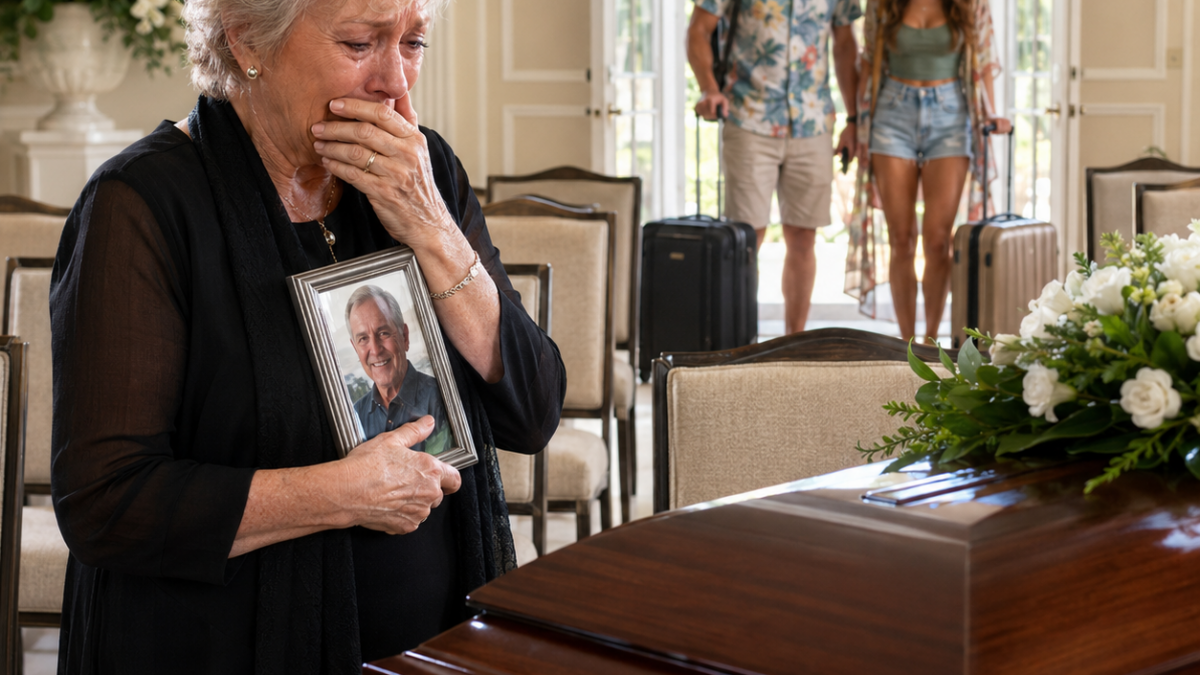
I was the only person who attended my husband’s funeral.
A row of empty pews faced me as I stood beside Ricardo’s closed casket, listening to a pastor who had never met him speak in careful, generic phrases about devotion, family, and a life well lived. Five chairs had been reserved in the front row for our children and their families.
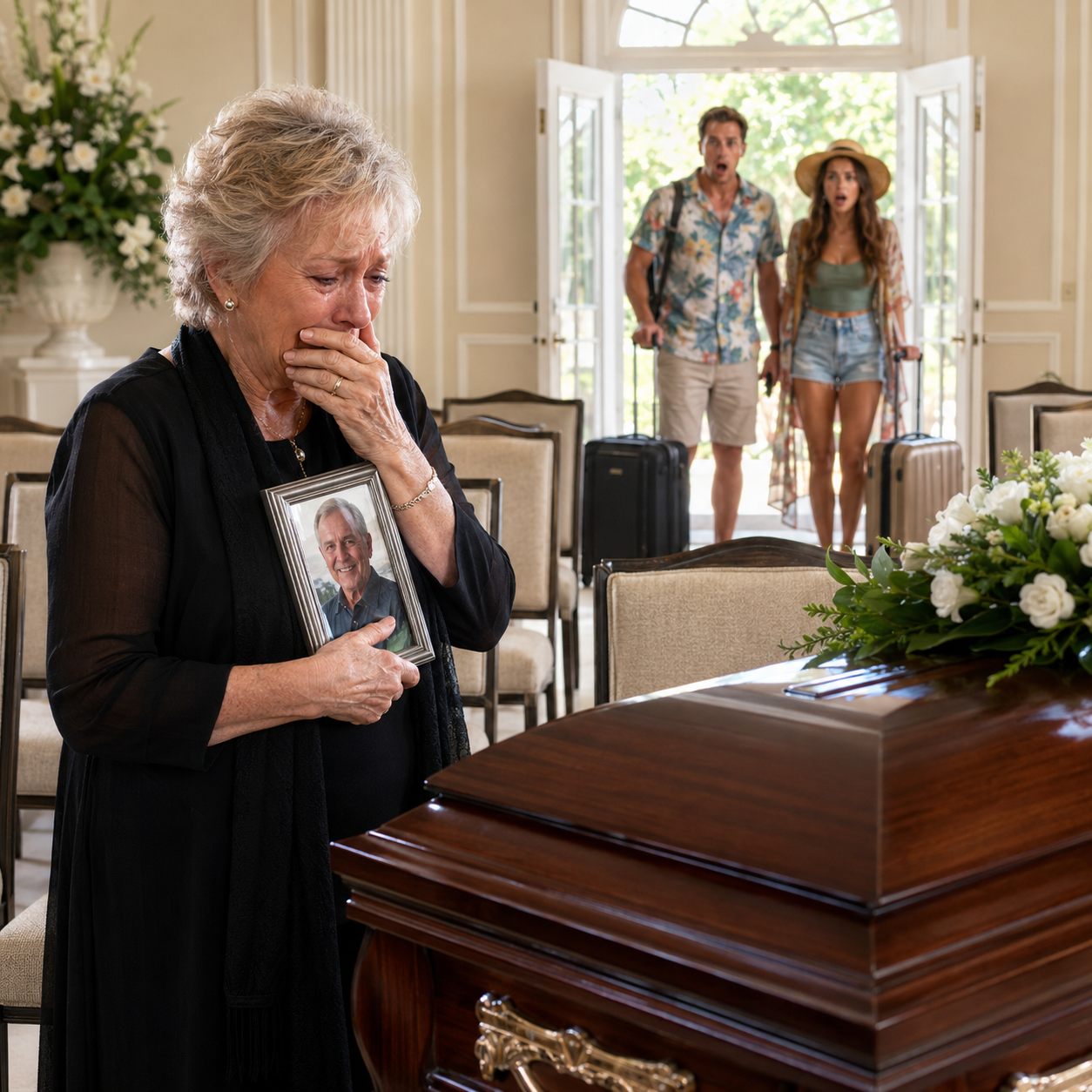
Every one of them remained empty.
Our son, Alex, had chosen a business meeting in Monterrey. Our daughter, Mariana, had chosen a weekend on a yacht with friends. Even our grandson Daniel, the one person who had called every day during Ricardo’s illness, had been told by his mother that the funeral would be “too emotionally difficult” for him.
He was twenty-two.
The decision should have been his.
The funeral director stood near the side aisle, pretending not to look at the vacant seats. Outside, an October sky hung low and gray over Mexico City, unable to decide whether it wanted to rain. Ricardo had always hated indecision. He believed that if a thing had to be done, it should be done properly and on time.
“Mrs. Ramírez,” the director whispered, glancing at his watch, “would you like to wait a few more minutes?”
“No,” I said.
My voice sounded firmer than I felt.
“Begin. Ricardo hated delays.”
The pastor opened his book.
I sat alone.
The emptiness surrounding me made more noise than any crying crowd could have made. Alex should have been on my right, with his wife beside him. Mariana should have been on my left. Daniel should have been there holding my hand, the way he had done in the hospital whenever the doctors used words neither of us wanted to hear.
Instead, there were only lilies.
Ricardo would not have liked them. He thought white lilies smelled too much like funerals, which was exactly what they were used for. He would have preferred the red roses from our garden, the ones he had pruned every winter for forty-three years.
I fixed my eyes on the polished wood of the casket and remembered his hands.
Those hands had repaired leaky faucets, packed school lunches, planted trees, changed tires in the rain, and buttoned his own shirts long after the illness made his fingers stiff. He had carried Alex on his shoulders and taught Mariana how to plant seeds in straight rows. During our marriage, those same hands had reached for mine thousands of times without ceremony.
In the final six months, they had grown thin and cool.
I had held one of them when he died.
Neither of our children had been there for that either.
The service lasted twenty-three minutes. At the cemetery, the wind cut across my face while the casket was lowered. I scattered a handful of soil over the lid. The earth struck the wood with a hollow sound that reminded me of my footsteps through our empty house.
I did not cry.
Not because I did not love him.
I had cried so much during his illness that grief seemed to have emptied me from the inside. There was no dramatic collapse, no wail, no moment when I fell against the grave. There was only a tired woman in a black coat, standing alone while the man who had shared nearly fifty years of her life disappeared beneath the ground.
When I returned home, Ricardo’s slippers were still beside his chair. The remote control rested precisely where he had left it, aligned with the edge of the table. His reading glasses sat on top of a gardening magazine, folded open to an article about winter roses.
The silence was unbearable.
I poured a glass of the wine we had saved for special occasions. Nothing about that day felt special, but opening an ordinary bottle seemed disrespectful.
Then, moved by an impulse I still cannot explain, I picked up my phone and opened Instagram.
Mariana’s face appeared first.
She had posted three hours earlier, at almost the exact moment the pastor began the funeral service. In the photograph she stood on the deck of a yacht, holding a glass of champagne. The sea behind her was bright blue. She wore white and smiled with the easy joy of someone who had escaped every unpleasant obligation.
The caption read, “Choosing life, joy, and the people who lift me up.”
I stared at the picture until the screen blurred.
Her assistant had called the previous evening to say Mariana was unwell and could not travel.
My daughter was not unwell.
She was celebrating.
I looked at Alex’s profile next. He had posted a photograph from a luxury conference room with a group of executives. His caption praised ambition, networking, and knowing when an opportunity was too important to miss.
There was no mention of his father.
No photograph.
No farewell.
Nothing to suggest that on that same morning, the man who had paid for his education and invested in his first business was being buried without him.
I turned off the phone.
On the wall opposite me hung a photograph from our fortieth anniversary. Ricardo and I stood in front of the rose garden, holding hands. His smile was open and warm. The flowers behind us blazed red in the summer light.
Now the roses were fading into winter.
So was the illusion I had protected for years.
“Tomorrow,” I said aloud, “I’m calling Mr. Martínez.”
Julián Martínez had been our attorney for more than three decades. He had prepared contracts, property documents, business agreements, and, two years earlier, our will.
That will had been simple.
Half of everything would go to Alex. Half would go to Mariana. Daniel, our only grandchild, would receive a smaller education fund. Alex and Mariana could decide whether to sell the house. The mountain cabin would belong to both families so they could “enjoy it together.”
Ricardo had smiled when we signed.
“They may not visit much now,” he had told me, “but one day they’ll understand what family means.”
He believed that until near the end.
I wish I could say the same.
That night I sat at the kitchen table where Ricardo had prepared breakfast every Sunday. He always made extra pancakes long after the children had moved out.
“You never know when they might appear,” he would say.
They rarely did.
When they came, it was usually because Alex needed investment capital or Mariana had discovered another expense that was “essential” to her family’s future.
I opened the desk drawer and found the brown folder labeled WILL. The document inside felt like an artifact from another life, one in which duty and love had seemed like the same thing.
Upstairs, Ricardo’s medication still stood on the bedside table. The doctor had said his decline might be quick.
It was not.
For six months, I watched the strongest man I knew lose weight, mobility, and eventually hope. Alex visited twice. Mariana came once and stayed less than two hours because of an “emergency” at work.
Daniel came every week.
He read to his grandfather when Ricardo’s eyesight weakened. He organized the medications into labeled boxes, repaired the loose railing on the patio, mowed the lawn, and drove me to the hospital on nights when I was too exhausted to trust myself behind the wheel.
He never asked for money.
He never posted photographs of his kindness.
He simply came.
Ricardo died on a Tuesday morning. His breathing had been shallow since dawn. I held his hand while sunlight entered through the curtains.
He opened his eyes one final time.
“You were always the best part of me, Elena,” he whispered.
Then he was gone.
I called Alex immediately.
“I’ll come this weekend,” he promised.
I called Mariana.
“I’m booking the first flight I can get,” she said.
Neither kept the promise.
The following morning, I called Mr. Martínez’s office.
His secretary, Carmen, recognized my voice.
“Mrs. Ramírez, I am so sorry. We only heard about Mr. Ricardo yesterday.”
“Thank you. I need an appointment with Julián. It’s urgent.”
“He has an opening tomorrow at ten.”
“I’ll be there.”
I slept badly, but not because I doubted my decision. For the first time since Ricardo’s death, I had a sense of direction. Grief was still inside me, heavy and cold, but beneath it there was clarity.
Mr. Martínez’s office smelled of old books and fresh coffee. He rose when I entered and took both my hands.
“Elena, I’m deeply sorry. Ricardo was an extraordinary man.”
“Yes,” I said. “He was.”
I sat in the leather chair across from his desk.
“I need to change the will.”
He nodded with professional calm.
“Of course. What revisions would you like to make?”
“I want Alex and Mariana removed.”
That surprised him.
He slowly took off his glasses.
“Completely?”
“Completely.”
He waited, perhaps expecting me to reconsider the word.
I did not.
“The house, the accounts, the investments, the cabin—everything goes to Daniel.”
“Your grandson.”
“Yes.”
Julián leaned back.
“Elena, I have to say this. Grief can make any decision feel urgently necessary. It is often wise to allow some time before making a permanent change.”
“I buried Ricardo alone yesterday.”
He said nothing.
“Neither of our children attended. Mariana was on a yacht. Alex was at a business meeting he could have rescheduled. During Ricardo’s illness, they barely came. Daniel called every day. He cut the grass, drove me to the hospital, read to his grandfather, and stayed when staying was difficult.”
“He is only twenty-two.”
“He has shown more character at twenty-two than his parents have shown in years.”
Julián studied my face.
“This is not revenge,” I continued. “I’m not trying to punish my children because they hurt my feelings. I am deciding who understands the value of what Ricardo and I spent our lives building.”
He folded his hands.
“They may challenge the will after your death.”
“Then structure it so their chances are as small as legally possible.”
“A trust would help.”
“Create one for Daniel. I don’t want his parents to control it. He should not receive unrestricted access until he turns thirty, except for education, medical needs, or approved projects.”
“That is sensible.”
He began taking notes.
“Would you like to leave Alex and Mariana nominal amounts? Sometimes that makes intent clearer.”
“No. Document the financial support they have already received. There are records.”
Julián looked at me again, more carefully this time.
“You’ve considered this.”
“For longer than I realized.”
When I left his office, I expected to feel triumphant.
I did not.
I felt lighter.
There is a difference between vengeance and justice. Vengeance wants someone else to feel pain. Justice places responsibility where it belongs.
I was not taking away something my children owned.
I was stopping them from inheriting what they had already begun treating as theirs.
That evening I opened a storage cabinet I had avoided for months. Inside were boxes organized by year. Ricardo kept meticulous records: checks, transfers, receipts, loan agreements, and handwritten notes.
The folder marked ALEX — EDUCATION AND BUSINESS was thick.
We had paid for his graduate degree abroad. We gave him seventy thousand dollars to launch his first business, which failed within a year. Later came the down payment on the large house he said he needed to impress clients, the imported car, and the money used to settle debts after his first marriage ended.
Each request had been presented as temporary.
Each carried a promise that he would repay us once the next opportunity succeeded.
He never did.
The folder marked MARIANA was no smaller.
Her extravagant wedding cost nearly as much as a modest apartment. Then came renovations to the penthouse she “deserved after working so hard,” a private-school education for Daniel, vacations to recover from stress, and repeated emergencies that were often luxuries disguised by urgent language.
Every request contained an unspoken promise.
If we helped, they would visit more.
If we solved this crisis, family would become close again.
The money arrived.
The closeness did not.
What shocked me was not the total amount. It was the pattern. They no longer viewed our help as generosity. To them, our savings had become an early installment on their inheritance.
I closed the folders and returned them to the cabinet.
Not as evidence for a courtroom.
As evidence for my own heart.
The next evening, Daniel called.
“Grandma, can I come by tomorrow? I found some books Grandpa would have liked. I thought you might want to see them.”
The tenderness in his voice nearly undid me.
“Come for lunch.”
He arrived at noon in his old car, carrying a paper bag of used books. He had Ricardo’s gentle smile and the same habit of rubbing the back of his neck when uncertain.
We ate on the patio. I made lasagna, his grandfather’s favorite, even though there was too much for two people. Daniel told me about university, his part-time work at a bookstore, and his hope of applying to a graduate research program in Mexican literature.
“Sometimes I think about the way Grandpa lived,” he said. “He always said success wasn’t having a lot. It was needing little.”
I smiled.
“He would be proud that you remembered.”
“Do you think he was proud of me?”
The vulnerability in his voice reminded me that neglect moves through generations. Alex and Mariana had been distant from us, but they had also raised Daniel amid their obsession with work, image, and achievement. He had spent much of his childhood searching for approval he was too polite to demand.
“I know he was proud.”
After lunch, Daniel insisted on washing the dishes. While I dried them, he mentioned the research program again.
“What is stopping you from applying?”
“The cost. I can work more hours, but then I’d have less time for study. It may not be practical.”
“How much?”
He named an amount smaller than one-tenth of what his mother had spent renovating a guest room no one used.
“Apply.”
“Grandma, I wasn’t asking you for money.”
“That’s one reason I’m offering.”
He looked uncomfortable.
“I can’t take advantage of you.”
“Helping someone accept an opportunity is not being taken advantage of. Your grandfather and I saved for moments that mattered. This matters.”
He remained silent, wiping the same plate long after it was dry.
“Promise you’ll do the work,” I said.
“I promise.”
“Then apply.”
When he left, carrying half the lasagna because I insisted, I stood in the doorway until his car disappeared.
Mariana called the following morning.
It was the first time I had heard her voice since the funeral she skipped.
“Mom, Daniel says you’re planning to pay for his research program.”
No greeting.
No question about how I was sleeping.
Straight to the money.
“Good morning to you too.”
“I’m sorry. I’m only concerned. You just lost Dad. You shouldn’t be making major financial decisions.”
“The concern in your voice would sound more convincing if you had asked how I was.”
“That isn’t fair.”
“Neither was telling me you were sick while posting photographs from a yacht during your father’s funeral.”
Silence.
“How did you know?”
“You posted it publicly.”
“Mom, it was complicated. I was processing the loss in my own way.”
“Your father spent six months dying. You had time to begin processing before his burial.”
“That’s cruel.”
“No. Cruel was allowing your assistant to lie while you raised a champagne glass.”
She inhaled sharply.
“I can explain.”
“If you want to talk, come visit me. Otherwise I will assume you are too busy, as always.”
I ended the call before she could respond.
My hands trembled.
Not with anger.
With relief.
For decades, I had swallowed words to preserve peace. I had confused peace with silence and silence with love. That morning, I understood how expensive that confusion had become.
Alex appeared the next day without calling.
His imported car occupied most of the driveway. He entered wearing an expensive suit and the expression he used in business meetings when he wanted to appear concerned but remain in control.
He hugged me briefly.
“You look tired.”
“I buried my husband three days ago.”
His eyes dropped.
“Mariana told me about your conversation. We’re worried.”
“Are you?”
“Of course. Losing Dad was difficult for all of us.”
“I imagine some of you managed the difficulty better than others.”
He had the decency to look ashamed.
“About the funeral—I truly couldn’t cancel the meeting. It was essential.”
“The meeting for the business your father and I helped finance?”
His expression changed.
“That was years ago.”
“So was the down payment on your house and the money used to clear your debts. I’m not mentioning them to embarrass you. I’m mentioning them because you seem to have forgotten how often your father placed your future before his own comfort.”
“Why are we discussing money now?”
“Because Ricardo died, and I’m reviewing more than our assets. I’m reviewing our choices.”
Alex shifted in his chair.
“What does that mean?”
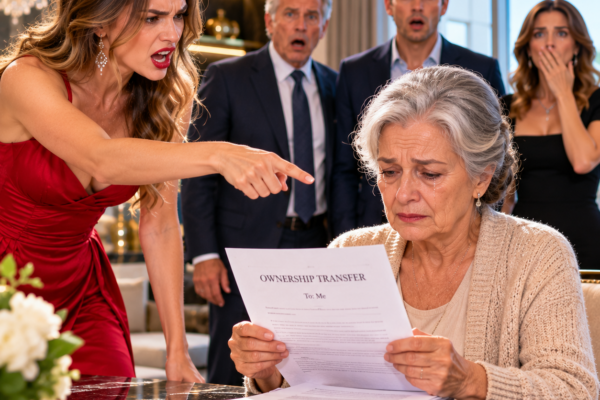
“I changed the will. You and Mariana have been removed. Everything will go into a trust for Daniel.”
For a second, he simply stared.
“You can’t do that.”
“I can. I did.”
“Daniel is practically a child.”
“He is a responsible adult.”
“This is grief talking. You aren’t thinking clearly.”
“I am thinking clearly for the first time in years.”
Alex rose. His face had turned red.
“This is because of the funeral.”
“The funeral was the final line in a much longer story. A story of taking without gratitude, demanding without presence, and treating your parents like a bank that happened to share your last name.”
“I apologized.”
“You explained why your meeting mattered more.”
“Fine. What do you want? More visits? Weekly calls? We can arrange something.”
The word arrange told me everything. He was approaching love as a contract and attendance as a service purchased through inheritance.
“There is nothing to negotiate.”
He paced once across the room.
“Mariana and I can challenge the will.”
“You may try.”
“You’ll regret this.”
He took his keys and left, closing the door hard enough to shake the glass.
Through the window, I watched him pull out his phone before reaching the car. He was probably calling Mariana, transforming my decision into a family emergency.
That evening, I opened another bottle of the wine Ricardo had saved and carried one glass to the garden. Most of the roses were fading, but several blooms remained, stubborn spots of red against the cooling air.
Ricardo had once told me that love was like those plants.
It needed constant care, honest pruning, and the courage to survive winter.
Our winter had arrived.
I intended to survive it.
Three days passed without a call from either child. Daniel continued sending messages asking whether I needed groceries. The contrast was so clear that it almost hurt.
The storm arrived on Thursday in the form of Mariana and her husband, Fernando.
They entered without knocking. Mariana had never learned that growing up in a house did not grant permanent ownership of its doors.
She placed her designer bag on the entry table.
“We need to talk.”
Fernando remained behind her, checking his phone. He had spent two decades looking for exits from family gatherings, as though affection were an appointment running overtime.
I continued watering the patio plants.
“Good morning to you too.”
“Is what Alex told me true?”
“That depends on what he told you.”
“That you disinherited us and left everything to Daniel.”
“Yes.”
“This is insane.”
I set down the watering can and invited them to sit.
“It is not insanity. It is consequence.”
“Consequence for missing a funeral?”
The coldness of the question startled me.
“Your father was sick for six months. You visited once and stayed less than two hours. You did not call to ask whether he was afraid or in pain. When he died, you chose a yacht over saying goodbye.”
“I was grieving in my own way.”
“That was not grief. It was avoidance.”
She looked toward Fernando for support, but he was still answering messages.
“And Daniel?” she asked. “Why should he receive everything? He barely knew Dad.”
“Daniel visited every week. He read to him when his eyesight failed. He helped organize the medication and drove me to the hospital. He knew your father because he was present.”
“This is unfair. We are your children. We have a right to inherit.”
“No. You have no ownership over what your father and I earned. The property is mine. I decide where it goes.”
Fernando finally put away his phone.
“Mrs. Ramírez, Mariana is concerned that a decision made during acute grief could later be regretted.”
“Spare me the concern you only discovered after money became involved.”
His mouth tightened.
“You and Mariana rarely visited unless you needed assistance. That is not an insult. It is a documented pattern.”
Mariana looked genuinely shocked—not because the accusation was false, but because I had finally spoken it aloud.
“We’re family.”
“Family calls. Family visits. Family appears in difficult moments. It does not arrive only on birthdays when gifts are expected.”
“You’re being cruel.”
“Your father spent six months in that chair waiting for his children to walk through the door. He died disappointed. Do not invoke what he would have wanted while defending the choices that hurt him.”
Her face reddened.
“This isn’t over. Alex is speaking to a lawyer.”
“The will was prepared by a competent attorney. Both the document and my mental capacity are properly established.”
“You’re choosing Daniel over your own children.”
“I am choosing character over entitlement.”
Mariana grabbed her bag.
Fernando followed her.
I did not slam the door after them.
I closed it gently.
The phone began ringing minutes later. I let the first three calls go to voicemail. On the fourth, I answered.
It was Carlos, our neighbor of more than thirty years.
“Elena, is everything all right? We saw Mariana leave.”
“I’m settling unfinished accounts.”
There was a pause.
“Lucía and I were wondering if you’d like to have dinner with us.”
I almost refused. Since Ricardo’s death, I had avoided social visits. But suddenly the thought of sitting with people who had known us before money and ambition complicated everything felt comforting.
“I’d like that.”
Their home smelled of stew and warm bread. After dinner, I told them about the empty funeral, the new will, and my confrontations with the children.
Lucía held my hand.
“You did what you had to do.”
“They’re still my children.”
“Being their mother does not require rewarding every choice,” Carlos said. “You and Ricardo gave them love, education, and opportunity. What they did with those gifts belonged to them.”
“And Daniel?”
“That boy has a good heart,” he said. “Ricardo always knew it.”
I returned home feeling lighter, not because they had approved my decision, but because they listened without trying to purchase, negotiate, or control it.
The next morning a handwritten letter arrived from Alex.
“Mom,” it began, “after reflecting on our conversation, I recognize that I may have failed you and Dad in recent years. Work and responsibility accumulated, and I allowed both of you to become secondary. There is no excuse for missing the funeral. I should have been there.
“I understand your disappointment, although the will is painful. Daniel is a good young man and deserves recognition. Perhaps we can discuss a distribution that acknowledges his support without completely excluding your children. We are family despite everything.”
I read the letter three times.
It was almost sincere.
Almost.
The proposal about distribution exposed the true purpose. He was still negotiating. His apology had percentages hidden between the lines.
Even so, it represented the first time he had admitted any failure.
I did not respond.
An honest sentence can be a beginning.
It is not proof.
Daniel arrived that afternoon with a toolbox.
“I noticed the patio railing is loose.”
I watched him work. He measured twice before cutting, exactly as Ricardo used to do. When he finished, I asked him to sit beside me.
“There is something I need to tell you.”
I explained the change to the will and the trust created in his name.
Daniel remained silent for a long time.
“Grandma, I don’t deserve that.”
“You didn’t perform any of your kindness expecting a reward. That is precisely why I trust you.”
“My mother and Uncle Alex will hate me.”
“They are angry with me, not you.”
“I don’t want to become the reason this family breaks apart.”
I took his work-worn hands in mine.
“You are not the cause. Their choices existed before my decision. Your grandfather built what we have through honesty and labor. I need to know his legacy will be managed by someone who understands those things.”
Daniel’s eyes grew wet.
“I’ll try not to disappoint either of you.”
“I know.”
After he left, I remained in the rocking chair until sunset.
“Am I doing the right thing?” I asked the sky.
There was no answer.
Only the steady quiet that comes when a decision belongs fully to you.
A week later, Mr. Martínez called.
“Alex contacted me. He wanted to know whether the new will had been officially executed.”
“And?”
“I told him it had. He asked about challenging it. I explained that you are entitled to dispose of your property and that we documented your capacity carefully.”
“Thank you.”
“He may return with a compromise.”
“I expect he will.”
After the call, I sat at the kitchen table and wrote a letter for my children to open after my death.
I did not write it as an accusation.
I wrote about the dreams Ricardo and I once had for them. I described the gradual sadness of watching money create distance, and how the smallest kindnesses—calls, visits, shared meals—had always mattered more than every property they might inherit.
I also wrote that I still loved them.
A mother’s love does not disappear simply because it has been wounded. But love can change shape. It can step back. It can refuse. It can close a door without turning off the porch light.
I sealed the letter and placed it with the legal documents.
The next morning, Alex returned.
This time he wore jeans and a simple shirt. Without the executive suit, he looked almost like the boy who once helped Ricardo paint the garage.
“Can we talk?”
I let him in.
He looked around as though seeing the house for the first time in years.
“You changed the curtains.”
“Two years ago.”
He nodded, embarrassed.
We sat in the living room.
“I received your letter,” I said.
“I meant what I wrote.”
“Did you?”
He hesitated.
“I know we failed you. But I’ve thought of a fair compromise. Fifty percent to Daniel, twenty-five to Mariana, and twenty-five to me.”
I studied my son.
He was discussing percentages in the room where his father had spent six months hoping he would visit.
“This is not a business meeting.”
“We are still your children. That must count for something.”
“It counted every time we paid for your education, businesses, home, car, and debts. You have received portions of our life’s work repeatedly.”
His mouth opened, then closed.
For the first time, understanding—not outrage—appeared in his eyes.
“I really ruined this, didn’t I?”
I did not answer.
He already knew.
At the door, he paused.
“I miss Dad. I didn’t realize how much until it was too late.”
“I miss him every day.”
After Alex left, I went to the garden. Tiny green shoots had appeared on stems that looked dead the week before.
Perhaps something was waking in my son too.
Not enough to change the will.
But perhaps enough to change the man.
Spring arrived quietly. Six months passed. Alex began calling every Sunday. The conversations were brief and sometimes awkward, but he no longer mentioned the inheritance.
Mariana sent occasional messages about trivial things while avoiding the subject entirely.
Daniel became a steady presence. He came for lunch, brought books, repaired small things, and remembered details about what I liked. His gifts were inexpensive and thoughtful: a rare plant, a handmade bookmark, a mug printed with a line from a poet Ricardo loved.
One Sunday he arrived with a thick folder.
“I have a project.”
After lunch, he spread drawings and budgets across the table.
He wanted to transform the mountain cabin into a small community library. The area had no free reading space for children, and several of his university friends were studying socially responsible architecture.
Then he showed me another set of plans.
“Eventually, not now, the main house could become a community center for older adults. Workshops, reading groups, legal advice, technology classes.”
I looked at him.
He did not see property as status.
He saw possibility.
“Your grandfather would have loved this.”
“He always said an empty house was wasted potential.”
Ricardo had said exactly that after Alex and Mariana moved away and their bedrooms went unused.
“The project will be expensive,” I warned.
“I’m saving. My friends will volunteer. We can start small.”
“Why not start now?”
Daniel stared at me.
“You don’t have to do that.”
“I’m nearly eighty. I would rather watch this dream become real than have people argue over money after I’m gone.”
The following week we went to the bank. We opened a protected project account and transferred enough to begin the cabin renovation. I retained control and kept ample resources for my own needs. Supporting Daniel did not require risking my security.
The manager had known Ricardo and me for decades.
“He would be proud,” he said.
“Yes. Ricardo always believed money was a tool. Its value depended on how it was used.”
Outside the bank, Daniel looked overwhelmed.
“I promise every cent will be accounted for.”
“That is why I trust you.”
News traveled quickly.
Alex called that evening.
“I heard you opened an account with Daniel.”
“Yes.”
“What is it for?”
“The community library.”
He was quiet.
“That’s an interesting idea.”
“It was his.”
“If you need help with permits or legal documents, I can assist.”
The offer surprised me.
“Thank you. I’ll tell him.”
Mariana appeared the next morning without Fernando. She drove a modest car I did not know she owned and wore little makeup.
“Can we talk?”
I let her into the kitchen.
“I heard about Daniel’s project,” she said. “I think it’s a wonderful idea.”
I waited for the demand that I stop funding it.
It did not come.
“Dad used to talk about opening a place for children to read,” she continued. “Do you remember?”
“I do. Daniel remembered too. He listened when his grandfather spoke.”
A shadow crossed her face.
“I should have listened more.”
The clock ticked between us.
Then she said, “I’m leaving Fernando.”
I stared at her.
They had been married nearly twenty years.
“What happened?”
“I realized we built an entire life around appearances. The house was too large, the car too expensive, the parties too elaborate. Everything looked successful, but none of it felt real.”
She wiped away a tear.
“After you changed the will, I thought about why it hurt so much. At first, I told myself it was because you rejected me. Then I realized I had treated you and Dad as resources. I measured love by what people gave me.”
“Mariana…”
“You were right. I became the type of person Dad always warned us about. I lost the chance to say goodbye because I wanted to avoid discomfort.”
For the first time in years, I saw my daughter rather than the polished executive image she had built.
“Some things cannot be repaired,” she said.
“You cannot return to the funeral. But you can honor what your father valued from now on.”
That afternoon I took her to the cemetery.
She knelt before Ricardo’s simple stone and pressed her palm against his name. I walked away far enough to give her privacy.
Her shoulders shook.
It was a late farewell.
But perhaps not too late for the person who remained alive.
On the drive home, Mariana asked how she could help with the library.
“I have marketing experience. I could collect book donations or create a campaign.”
“Speak with Daniel.”
“Will he want my help?”
“He does not carry resentment the way the rest of us do.”
The following Sunday, Alex, Mariana, and Daniel sat at my table together.
The meal began stiffly. Everyone was polite in the cautious way people become polite when history is sitting among them.
Then Alex asked genuine questions about permits.
Mariana offered ideas for donations.
Daniel listened, answered, and eventually laughed at one of Alex’s terrible jokes.
It was not forgiveness.
It was not healing.
It was a possibility.
Alex volunteered to handle legal paperwork. Mariana offered to build a website and organize community outreach. Daniel looked at me, uncertain.
I nodded.
“Help is useful when it comes without control.”
They understood.
The cabin renovation began on a sunny Monday in April. Daniel assembled university friends and local volunteers. Alex arrived early wearing old jeans and carrying approved permits that saved weeks of delay. Mariana brought coffee, bread, a laptop, and a list of promised donations totaling more than five hundred books.
I watched my children follow their nephew’s directions with a humility I had never seen before.
It was not perfect.
There were tense silences whenever someone mentioned the past. Alex occasionally tried to take charge until Daniel reminded him, politely but firmly, that the design had already been agreed upon. Mariana sometimes focused too much on publicity and had to remember that the building mattered more than photographs.
But they listened.
By the end of the first day, Alex had dirt on his clothes, Mariana had paint in her hair, and Daniel was smiling more openly than I had seen in years.
“Grandpa would have loved this,” he said.
“Yes,” Alex replied. “He always talked about creating places where people could grow. I only recently understood what he meant.”
The work continued every weekend.
Alex obtained materials at reduced cost and created a mentorship program for students interested in business. Mariana organized book drives and reading events. Daniel remained the center of the project, calm and purposeful.
One afternoon I found Mariana alone, arranging children’s books.
“I’m enjoying this more than my actual job,” she admitted.
“That isn’t strange. Your father believed helping others created a satisfaction money could not purchase.”
“He told me that many times.”
“You were not listening.”
“No.”
She placed a book carefully on the shelf.
“About the will—I understand.”
I turned toward her.
“Daniel deserves it. He was here when we weren’t. And I want you to know I’m not helping because I expect you to change your mind.”
“I know.”
To my surprise, I did.
The money was no longer at the center.
The question had always been recognition. Presence. Shared values.
Several weeks later, Alex arrived carrying lumber.
“I sold the imported car,” he announced.
“Why?”
“I realized I owned it mostly to impress people I didn’t even like. I bought something practical.”
He paused.
“I used part of the difference to create a scholarship fund in Dad’s name.”
I looked at my son and saw a glimpse of the boy he had once been—the child who gave his allowance to a classmate whose mother needed medicine, the teenager who volunteered to teach older neighbors how to use computers.
“Your father would be proud.”
Daniel remained cautiously hopeful about the changes in his mother and uncle.
“What happened to them?” he asked while we planted flowering shrubs beside the library.
“Sometimes people become lost while pursuing things they were told mattered—status, money, approval. They need something powerful enough to show them how far they have wandered.”
“Grandpa’s death?”
“And the will. Perhaps seeing you choose a different path helped too.”
“Do you trust them?”
“Trust, but observe. Time reveals the truth of a heart better than words.”
Two months after construction began, the Ricardo Ramírez Community Library was ready.
Sunlight entered through large windows. Shelves made partly from reclaimed wood formed quiet reading corners. There were tables for students, comfortable chairs for older visitors, and a small garden outside.
On the main wall hung a photograph of Ricardo holding pruning shears in one hand and a book in the other.
Below it, a simple plaque read:
“In memory of Ricardo Ramírez, who believed books and gardens were places where dreams could grow.”
I arrived early on opening day.
For several minutes, I stood alone in the room while morning light moved across the restored floor.
Tears slid down my face.
“He’s seeing it,” Daniel said behind me.
He put an arm around my shoulders.
“I couldn’t have done this without you.”
“It was your vision.”
“I had the vision because you and Grandpa taught me what matters. And because you had the courage to make a difficult decision.”
Alex and Mariana arrived together. Alex carried serious books on ethical business and social responsibility. Mariana brought flowers and a leather-bound visitor book.
The opening exceeded everything we imagined.
Families arrived with children. Retired teachers offered to train volunteers. Local schools proposed afternoon reading programs. Older residents asked for book clubs and technology lessons.
Alex spoke to young people about mentorship.
Mariana organized volunteers.
Daniel connected everyone, turning a renovated cabin into a community.
Carlos and Lucía stood beside me.
“Ricardo would be glowing,” Lucía said.
“He would.”
Carlos nodded toward my children.
“They look different.”
They did.
The performance had fallen away. For the first time in years, Alex and Mariana seemed less concerned with appearing successful and more interested in doing something worthwhile.
At the end of the day, we gathered in the rose garden behind the library.
Alex lifted a glass of juice.
He had stopped drinking alcohol several months earlier, another quiet change he had not announced.
“To Ricardo,” he said, “who taught us more than we were willing to understand.”
“To Ricardo,” we repeated.
That evening, the four of us returned to my house and sat on the patio. The air smelled of roses and warm earth.
Alex cleared his throat.
“Mom, I’ve been thinking about Dad, the will, and everything that happened.”
My body tightened.
“Please let me finish. I’m not asking you to change anything.”
Mariana placed her hand over his.
“You were right,” he continued. “We failed to honor what you and Dad valued. We were not present when we should have been.”
“Daniel deserves what you chose to leave him,” Mariana said. “He understands what your life’s work means beyond its financial value.”
Daniel looked uncomfortable.
“We don’t have to discuss this.”
“Yes, we do,” Alex said. “Mom, neither of us will challenge the will. We are not helping with the library because we expect an inheritance. We’re doing it because we finally understand what Dad tried to teach us.”
“That value is not measured by what you own,” Mariana added. “It’s measured by what you build and whom you help.”
I looked at my children.
They were not suddenly perfect. Regret did not erase their absence. No community project could recreate the moment when their father was buried without them.
But I saw echoes of Ricardo.
Faint.
Incomplete.
Real.
“He would be proud to hear you say that,” I told them.
After everyone left, I took out the letter I had written for Alex and Mariana to read after my death.
The disappointment in it remained true.
So did the love.
But the letter belonged to an earlier version of our family. I folded it again and returned it to the drawer.
Perhaps one day I would rewrite it.
Perhaps actions were already rewriting it for me.
The first anniversary of Ricardo’s death arrived with autumn. I planned to visit the cemetery alone. I had not reminded anyone of the date. Presence should never be extracted through guilt.
As I prepared to leave, three cars stopped outside.
Alex stepped from the first. Mariana and Daniel emerged from the second. Daniel held a bouquet of red roses from our garden.
“We thought you might want company,” he said.
“I would.”
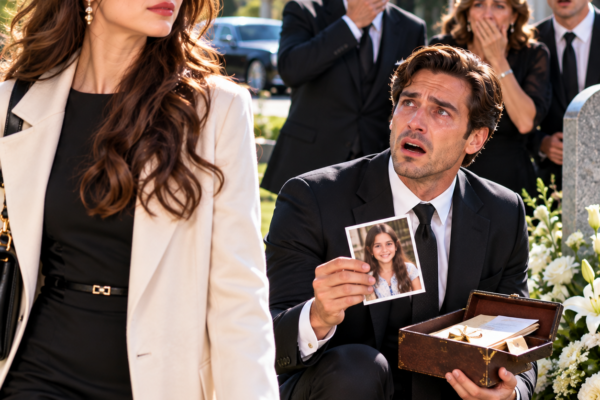
At the cemetery, dry leaves moved across the path. Daniel placed the roses on the grave. Alex set a small stone on the marker. Mariana opened Ricardo’s favorite poetry book and read several lines.
Then Alex stepped forward.
“Dad, I was late understanding you. I thought success meant becoming too important to interrupt my schedule. I hope you can see that I am trying to become better.”
Mariana rested a hand on the stone.
“I miss your stories, your laughter, and even the advice I pretended not to hear. I’m sorry I was not there. Thank you for not giving up on me, even when I gave up on the things you valued.”
Daniel knelt silently and placed a small object beside the roses.
It was the library key.
Finally, I approached.
My children stepped back.
“Look at what happened without you,” I whispered. “Nothing followed the plan we made. Maybe it became what we needed instead.”
I touched the cool stone.
“I love you. I always will.”
That evening, Alex and Mariana insisted on cooking Ricardo’s favorite meal. My kitchen filled with confusion, laughter, and the smell of a sauce that Alex made too salty. Mariana’s bread pudding leaned to one side. Daniel tried to keep everything from burning.
I sat at the table and watched.
Ricardo would have loved the disorder.
When we finally ate, the food was imperfect.
It tasted wonderful.
Stories emerged naturally. Alex remembered learning to ride a bicycle. Mariana told us about the treehouse Ricardo helped her build. Daniel described fishing trips with his grandfather.
We laughed.
Not politely.
Genuinely.
After dessert, Daniel brought out a rectangular package wrapped in plain paper.
“I made something for today.”
Inside was a leather-bound book.
The cover read:
“Ricardo Ramírez: A Life of Purpose.”
It contained photographs, letters, newspaper clippings about community work Ricardo had done quietly, and testimonies from friends whose lives he touched.
Alex had contacted former colleagues.
Mariana had interviewed neighbors.
Daniel assembled everything.
Near the end were photographs of the new library: Alex mentoring students, Mariana organizing donations, Daniel reading with children.
The final image showed the four of us standing beneath Ricardo’s plaque on opening day.
Below it were two words.
“The legacy continues.”
I closed the book and wept.
Alex and Mariana came to stand beside me.
“We know nothing can compensate for the funeral,” Alex said. “Or all the years when we were physically alive but emotionally absent.”
“But we finally understand what you and Dad tried to teach us,” Mariana added.
I took their hands.
“Your father would be proud of you tonight.”
“And you?” Alex asked.
“I am too.”
Later, after they left, I carried the book to the garden. The sky was clear, filled with the kind of stars Ricardo and I once watched together.
“It didn’t happen the way we expected,” I whispered. “Maybe it happened the way it needed to.”
I opened the book to a photograph of Ricardo teaching young Daniel how to prune roses. The boy watched his grandfather with complete attention.
Then I understood the deepest reason behind my decision.
It had never truly been about punishment, property, or inheritance.
It was about recognizing where the seeds Ricardo and I planted had found fertile ground.
They had taken root in Daniel.
And perhaps, late but genuinely, they were beginning to grow again in Alex and Mariana.
Time would reveal whether that growth endured.
For the first time since I stood alone beside Ricardo’s casket, I felt able to wait with hope instead of fear.
The funeral had shown me who was absent.
Everything that followed taught us all what it meant to return.